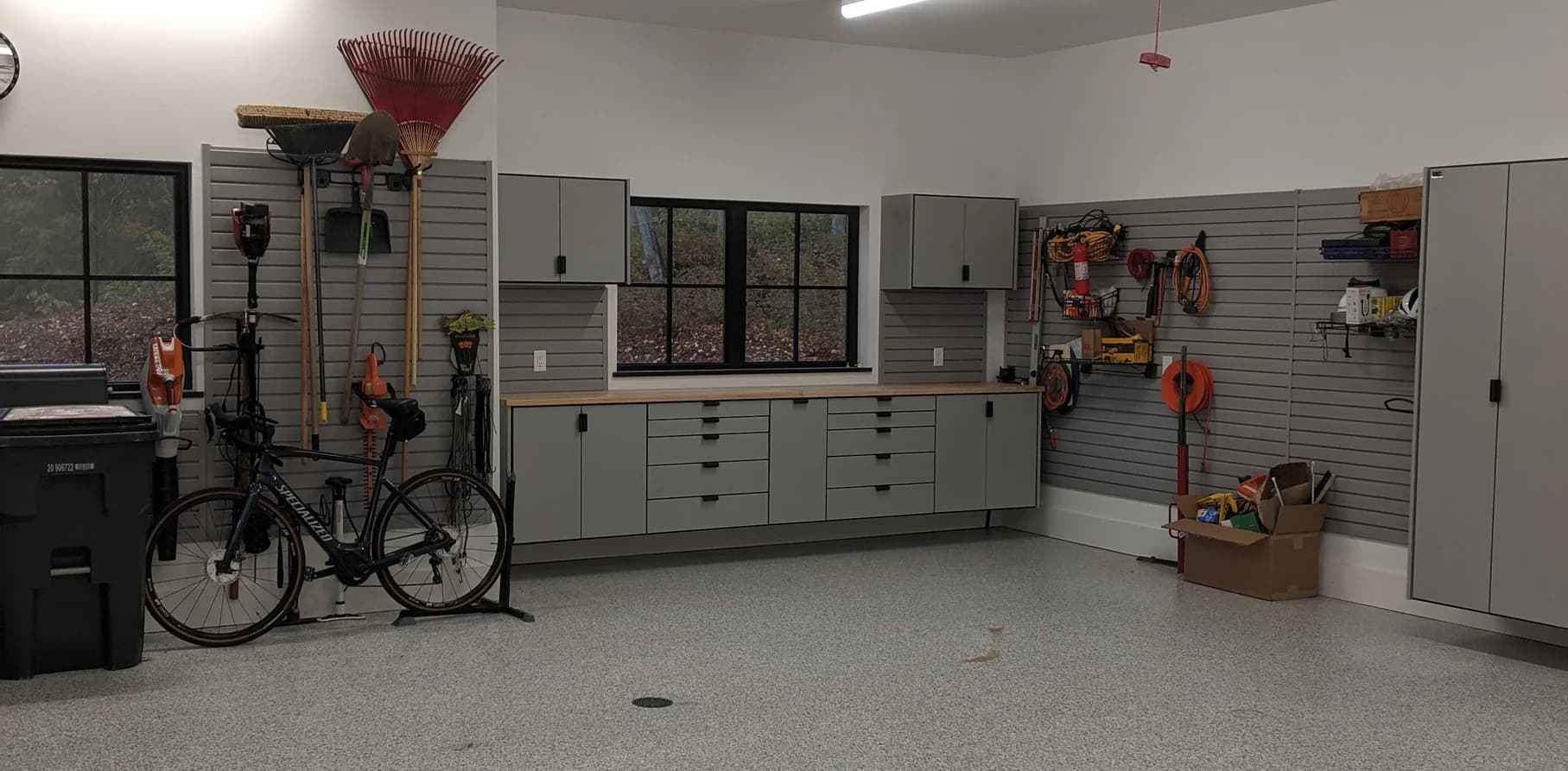
What to Know Before Coating Your Garage Floor
Snowmelt, road salt, and hot tires are hard on bare concrete. A floor coating protects it — if the surface is prepared properly first.

In a Wisconsin garage, the floor takes a beating. Snow and slush melt off the car, road salt soaks into the concrete, and oil spots set in. A coated floor resists stains, cleans up with a squeegee, and brightens the whole room.
Preparation is everything
Most coating failures trace back to the surface underneath, not the coating itself. Concrete needs to be mechanically profiled — typically by diamond grinding — so the coating can bond to it, rather than simply painted over.
- Cracks and spalled areas should be repaired before coating.
- Existing sealers or paint usually need to be removed.
- Moisture coming up through the slab can affect adhesion and should be checked.
Think about texture
Wet floors can be slippery. Decorative flakes broadcast into the coating add texture and grip, and they also hide dust between cleanings.
Plan the timing
The garage will be out of service while the floor is prepared and cures. Scheduling the floor before storage goes on the walls keeps the project simple.
Learn more about garage floor coatings or read Floor Coatings 101.